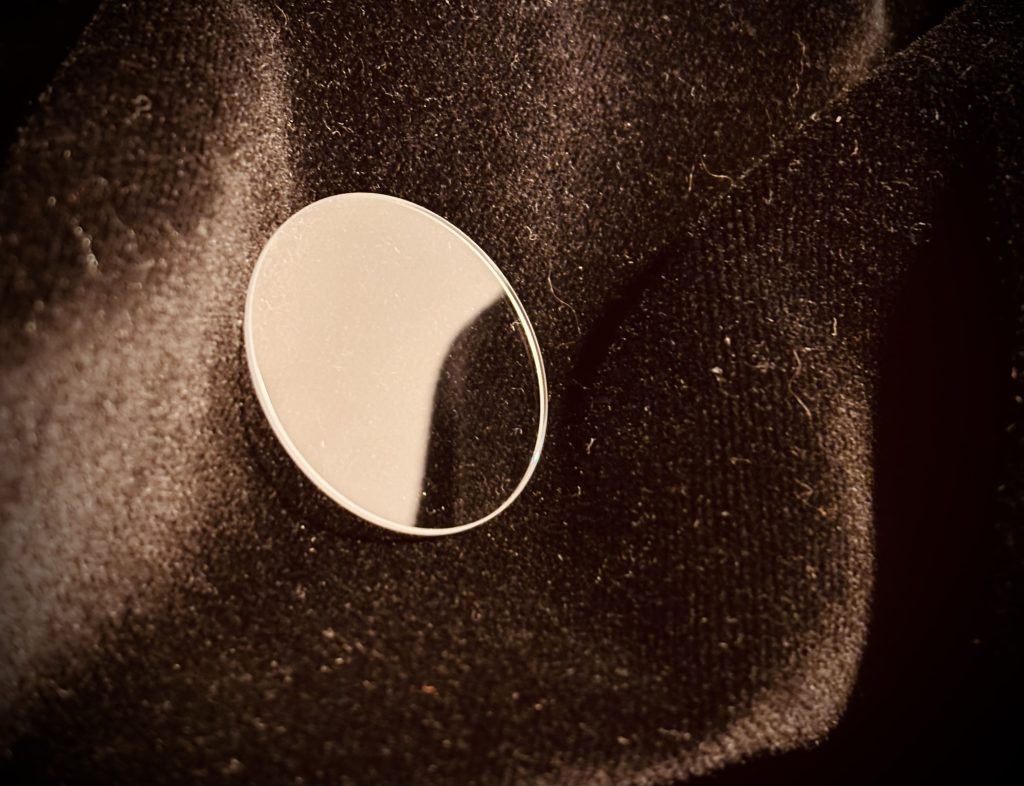
Invigorating is the feeling of bare feet on the ground. Surrounded by our creations, it is easy to forget where it all came from.
Food, wood, iron, and oil—all gifts from earth. Look further, dig deeper, and you will find even more.
Precious metals and gemstones, symbols of perseverance and reminders of our achievements.
As our fascination with these treasures grew, it inspired important advances in material science—such as the creation of “Geneva Rubies”.
In 1885, an unknown craftsman began distributing remarkable rubies to the European market, presented as natural “Geneva Rubies”. These were later recognized as the first synthetic gemstones.
Produced by melting aluminum oxide–commonly used on sandpaper today–the resulting material is chemically identical to its natural counterpart, yet it has fewer impurities. This creates a gemstone so hard it can be scratched only by diamonds.
In watchmaking, this material appears as the “jewels” in movements and the sapphire crystal. Using it is difficult, demanding special diamond tools and careful cutting to shape it to specification.
Its application is worth it, though. The unparalleled scratch-resistance and durability enable it to outlast me and keep telling my story.
RA.Gracioli