Winners aren’t always the most talented ones, but you can rest assured that they are more prepared.
Preparation is something naturally human. The ability to visualize the future and put in the work in advance is what sets us apart.
Today I want to explore how preparation manifests in one of watchmaking’s most demanding showcases of craftsmanship: the Poli Noir, or black polish.
A common method used on scientific instruments long before wristwatches existed. Is a showcase of craftsmanship on the astonishing hammers of Patek Phillipe minute repeaters, and on the zaratsu polish of grand seiko cases.
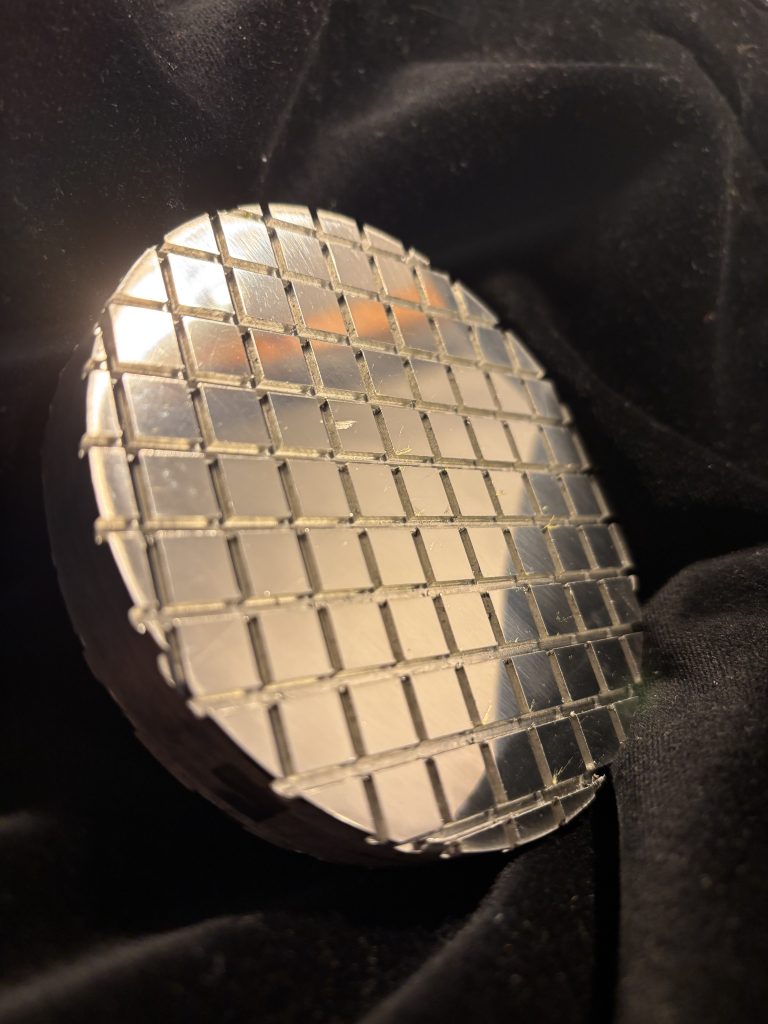
This lapping technique aims to achieve a perfectly flat and scratch-free surface, such that when light strikes it at a 90-degree angle it is absorbed, giving the surface a jet-black appearance.
Preparing to achieve it demands knowledge though. A flat plate embedded with thin diamond powder is used, and its soft composition demands constant re-flattening with the three-plate method—see entry 9.
Speed becomes the enemy here. Move too quickly, and friction generates just enough heat to melt tiny metal particles—ruining hours of careful work.
Even the workshop environment conspires against perfection. A single dust particle, invisible to the naked eye, can embed in the soft plate and create a microscopic crater where debris accumulates.
Mastering this process demands time and knowledge to manage all these different problems.
Preparation is key to success, some times it might even look like magical luck. But only the lucky ones know the magic behind the effort.
RA.Gracioli