Let me guide you through a piece of history. Imagine yourself at the seashore, as the cool evening breeze touches your skin and the sun sets for the day. Notice the straight line on the horizon, beautiful, isn’t it? In nature, this might be one of the only places where it can be experienced. Perhaps this very feeling inspired us to create the beautiful things we cherish today.
Think about it, every other straight line we have is made by humans. Today, making a straight line is easy. You just need a pen, a ruler, and paper. But take the ruler away, and even with straight-edged paper, drawing a straight line becomes much harder. In the end, straight lines help us by being an important reference point.
But how did we make our first straight line? There is actually a method that can create a perfect plane. And this is what I want to talk about today.
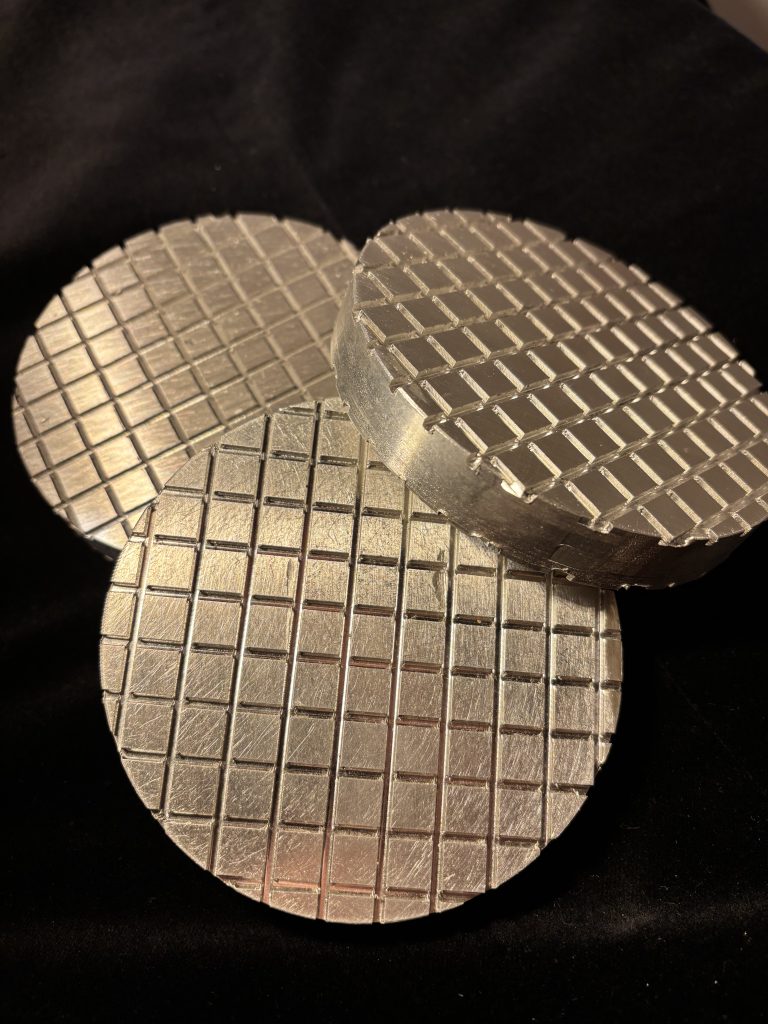
It starts by rubbing two blocks until they are in full contact, achieving curved surfaces that mirror each other. A third block is then added—since two concave or convex faces can never achieve perfect contact—when all three blocks can be mutually brought into contact, they define a perfect plane.
This is the method I am using to build my Tin lapping plates, and these will be used to polish the face of my watch case to achieve a straight, black-polished plane. A central piece of my design, and the perfect reflection of the horizon achieved by my own hands.
RA.Gracioli